
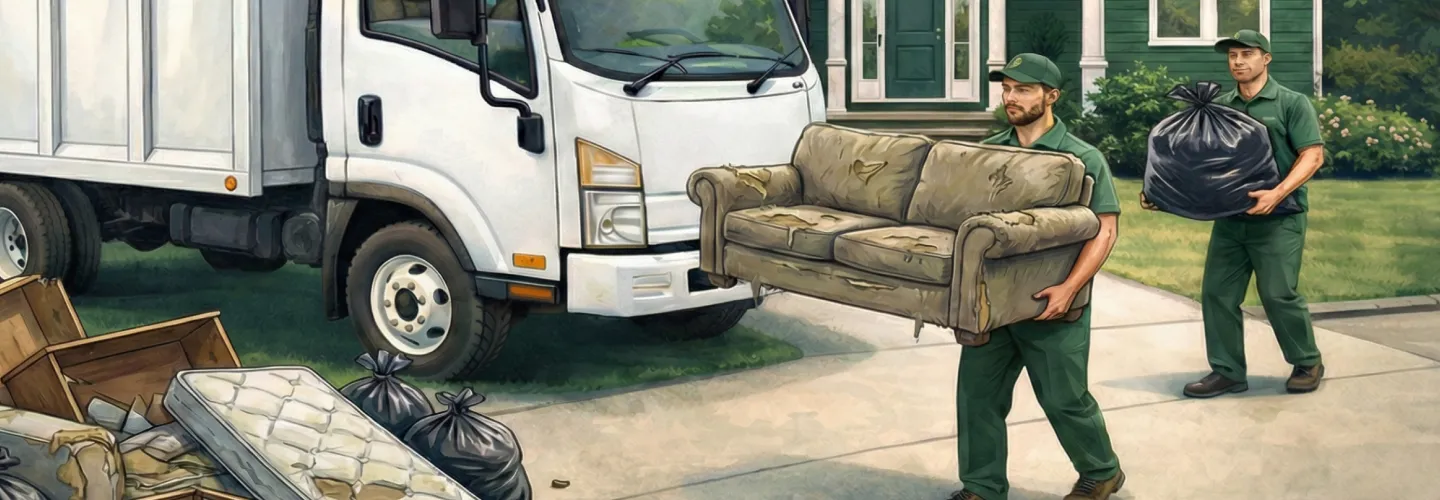
Tucker Restaurants Junk Removal Services
Choose our Restaurants Junk Removal for fast, reliable, and eco-friendly service that keeps your kitchen spotless and your business running smoothly.
Get a Free QuoteOur Tucker Junk Removal Services
Restaurants Junk Removal in Tucker, GA – Local Service Guide
Restaurants in Tucker, GA, from Main Street eateries to those near Northlake and Lavista Road, face unique junk removal needs. Seasonal menu changes, renovations, and health code updates often trigger the need for swift, reliable disposal of kitchen equipment, furniture, and packaging. Local regulations require careful handling of food waste and recyclables, making professional junk removal essential for compliance and efficiency. In busy commercial corridors like Hugh Howell Road, timing and discretion are crucial to avoid disrupting operations or customer flow. Tucker’s diverse restaurant scene also means varying volumes and types of debris, from old appliances to bulk seating. Coordinating with local haulers ensures proper sorting, recycling, and disposal, while navigating city rules and access challenges, especially in tight downtown spaces. For more on local requirements, visit the Tucker Public Works Department.
Key Considerations for Restaurants Junk Removal in Tucker
- Schedule pickups during off-peak hours to minimize business disruption
- Check for required permits or special disposal rules for commercial waste
- Use approved recycling and disposal channels for food and equipment
- Plan for limited access in downtown or shared parking areas
- Estimate debris volume accurately for efficient service coordination
- Address category-specific items like grease traps, refrigeration units, and bulk seating
Benefits of Restaurants Junk Removal in Tucker
Fast and Reliable Junk Removal
Eco-Friendly Disposal Solutions
Flexible Scheduling Options
Experienced and Professional Team
Compliance With Local Regulations
Cost-Effective Service Packages
Coordinating Restaurant Equipment Disposal with Tucker's Public Works and Code Enforcement
Restaurant closures, renovations, and equipment upgrades in Tucker generate substantial volumes of commercial waste requiring careful coordination with municipal authorities. Tucker's Public Works Department oversees infrastructure and right-of-way maintenance, while the Code Enforcement Division ensures properties remain compliant with municipal standards during and after junk removal operations. Restaurant owners and operators must address several key requirements before initiating removal projects:
- Commercial waste generated by restaurants—including booths, counters, shelving, and broken appliances—cannot be placed curbside with residential trash collections
- Right-of-way clearance is required when removal trucks must park on public streets or block sidewalks during loading operations
- Property maintenance standards must be upheld throughout the removal process; debris left on sidewalks, parking lots, or adjacent properties may trigger code violations
- Scheduling coordination with Tucker's Public Works Department is advisable to confirm any street or utility conflicts before large-scale removal projects
Failure to coordinate with municipal departments may result in fines or project delays. Restaurant operators should contact both departments well in advance of planned cleanouts.
Tucker Public Works Department
1975 Lakeside Parkway, Suite 350, Tucker, GA 30084
Phone: (678) 597-9040
Official Website: Tucker Public Works Department
Tucker Code Enforcement
1975 Lakeside Parkway, Suite 350, Tucker, GA 30084
Phone: (678) 597-9040
Official Website: Tucker Code Enforcement
Georgia's Solid Waste Management Act and Restaurant Waste Compliance
Restaurant junk removal in Tucker must comply with the Georgia Comprehensive Solid Waste Management Act (O.C.G.A. § 12-8-20 et seq.), which establishes statewide standards for the handling, transport, and disposal of solid waste. The Georgia Environmental Protection Division (GA EPD) enforces these regulations and oversees permitting for solid waste handling facilities across the state. Restaurant operators and junk removal providers should be aware of the following state-level requirements:
- Commercial solid waste haulers must use facilities permitted by GA EPD; unauthorized dumping of restaurant debris carries civil penalties
- Hazardous materials commonly found in restaurants—including cleaning solvents, used cooking oil in large quantities, fluorescent lighting tubes, and refrigerants—are prohibited from standard solid waste disposal streams
- Grease trap waste is classified as a special waste under Georgia regulations and must be transported by licensed haulers to approved processing facilities
- Appliances containing refrigerants (walk-in coolers, reach-in freezers, ice machines) require certified refrigerant recovery per EPA Section 608 regulations before disposal
- Construction and demolition debris from restaurant renovations must be separated and disposed of at C&D-permitted landfills
Violations of state solid waste regulations may result in fines ranging from $1,000 to $25,000 per day of violation under Georgia law.
Tucker Fire Marshal and Safety Requirements for Restaurant Cleanout Projects
Large-scale restaurant junk removal projects in Tucker must account for fire safety and building code compliance, particularly when removing fixed equipment, ventilation hoods, or grease exhaust systems. The Tucker Fire Marshal's Office provides fire code enforcement and building safety inspections that directly affect how restaurant cleanouts are conducted. Key safety and regulatory considerations include:
- Fire suppression systems (Ansul systems, sprinkler lines) must not be damaged or disconnected during equipment removal; coordination with a licensed fire protection contractor may be required
- Grease exhaust ductwork removal may require a building permit from the Tucker Building Division if structural modifications are involved
- Egress pathways must remain clear and accessible throughout the removal process; blocking fire exits with staged debris is a fire code violation
- Electrical and gas disconnections must be performed by licensed professionals before removing commercial cooking equipment, refrigeration units, or HVAC systems
- OSHA standards require proper personal protective equipment, safe lifting practices, and hazard communication when handling heavy commercial kitchen equipment
Restaurant owners should schedule a pre-project consultation with the Fire Marshal's office to identify any fire code concerns specific to their building.
Tucker Fire Marshal
1975 Lakeside Parkway, Suite 350, Tucker, GA 30084
Phone: (678) 597-9040
Official Website: Tucker Fire Marshal
Recycling and Diversion Options for Restaurant Equipment and Materials in Tucker
Restaurant junk removal generates a wide range of materials—many of which can be recycled, donated, or diverted from landfills. Tucker-area restaurant operators should explore available recycling and reuse channels before scheduling disposal. DeKalb County, which provides waste management infrastructure for the Tucker area, operates recycling programs and accepts certain commercial materials at designated facilities. Key diversion strategies for restaurant materials include:
- Scrap metal recovery: Stainless steel prep tables, shelving units, sinks, and exhaust hoods have significant scrap value and should be separated for metal recycling rather than landfill disposal
- Appliance recycling: Commercial refrigerators, freezers, dishwashers, and ice machines may be accepted by appliance recyclers after certified refrigerant recovery
- Furniture and fixture donation: Usable booths, tables, chairs, and smallwares may be accepted by local nonprofit organizations or restaurant supply resellers
- Electronics disposal: Point-of-sale systems, monitors, and other electronic equipment should be recycled through certified e-waste processors; Georgia does not currently have a statewide e-waste landfill ban, but responsible recycling is strongly encouraged
- Cooking oil recycling: Used fryer oil should be collected by licensed rendering companies, not disposed of in standard waste streams
The DeKalb County Watershed Management Department should be contacted regarding any grease or wastewater concerns associated with restaurant cleanouts, as improper disposal can result in sewer system violations and environmental contamination.
Tucker Building Permits and Zoning Compliance for Restaurant Renovation Debris
When restaurant junk removal is part of a larger renovation or tenant buildout project, additional permits and zoning approvals may be required from Tucker's Community Development Department. The Building Division reviews construction plans and issues permits for interior demolition, structural modifications, and mechanical system changes. Restaurant operators and contractors should consider the following:
- Interior demolition permits are typically required when removing built-in equipment, walls, flooring, or ceiling systems as part of a restaurant renovation
- Zoning compliance must be verified through Tucker Planning & Zoning if the restaurant's use classification is changing during the renovation
- Asbestos surveys may be required for buildings constructed before 1980; Georgia regulations mandate testing before demolition or renovation activities that disturb building materials
- Lead paint considerations apply under the EPA Renovation, Repair, and Painting Rule for pre-1978 commercial structures
- Debris staging on private property must not obstruct parking lot access, ADA-compliant pathways, or adjacent tenant spaces in multi-unit commercial buildings
Permit applications should be submitted to the Building Division a minimum of 5–10 business days before the planned start of work to allow for review and approval.
Tucker Building Division
1975 Lakeside Parkway, Suite 350, Tucker, GA 30084
Phone: (678) 597-9040
Official Website: Tucker Building Division
What Neighborhoods Do We Serve Throughout Tucker, GA?
- Downtown Tucker: The historic Main Street commercial corridor features older restaurant buildings with narrow rear access and limited loading zones. Equipment removal may require coordination with city events and pedestrian traffic patterns, and some structures may contain pre-1978 building materials requiring hazardous material assessments.
- Northlake Area: This major commercial district along LaVista Road and Northlake Parkway includes numerous strip-center and standalone restaurant locations. Wide parking lots generally allow straightforward truck access, though multi-tenant properties may require landlord coordination and shared-access scheduling.
- Smoke Rise: Primarily a residential community with limited commercial restaurant activity, but catering operations and home-based food businesses may generate periodic equipment disposal needs. Narrow, winding residential streets and steep driveways can present access challenges for large removal vehicles.
- Midvale Road Corridor: A mixed-use area with growing restaurant and retail development. Newer construction typically offers better loading access and fewer hazardous material concerns, though active construction zones may require coordination with the Tucker Engineering Department.
- LaVista Hills Adjacent Areas: Commercial properties along the Tucker-LaVista Hills boundary serve a dense dining market. Shared parking facilities and high-traffic intersections require careful scheduling of removal operations, ideally during off-peak hours between 9:00 AM and 3:00 PM on weekdays.
- Hugh Howell Road Commercial District: This corridor features a mix of independent restaurants and franchise locations in older commercial buildings. Rear-alley access is available at some properties, but aging pavement and tight turning radii may limit truck maneuverability for large-scale cleanout projects.