
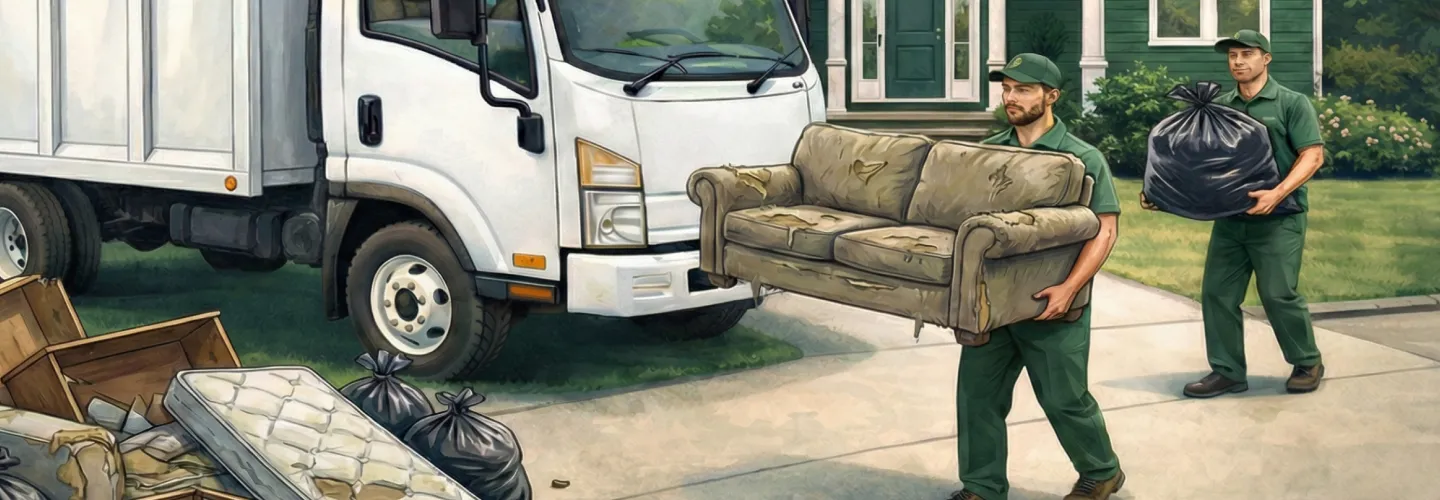
Tucker Construction Waste Management Services
Choose our Construction Waste Management for hassle-free, eco-friendly disposal that keeps your project on schedule and your site compliant—experience the difference with our trusted, professional team.
Get a Free QuoteOur Tucker Junk Removal Services
Construction Waste Management in Tucker, GA – Local Service Guide
Construction waste management in Tucker, GA, requires a tailored approach for both residential and commercial needs. In neighborhoods like Smoke Rise and Livsey, residents often face waste challenges during home renovations, seasonal cleanouts, or after major weather events. Furniture, appliances, and electronics are commonly replaced in spring and fall, with options to donate, recycle, or schedule city-approved disposal. For spaces like garages and basements, flooding in low-lying areas or heavy tree coverage in neighborhoods such as Montreal Park can drive the need for frequent cleanouts and yard waste removal, especially after storms or during leaf cycles. Commercial properties in Tucker’s Main Street district and Northlake area must manage higher waste volumes from office remodels, restaurant upgrades, or retail turnovers, often requiring discreet, timely pickups to minimize business disruption. Specialty services—like dumpsters for construction debris or coordinated estate cleanouts—are essential for larger projects, foreclosures, or hoarding situations, demanding careful planning and compliance with local regulations. For guidance on permits and disposal rules, visit the Tucker Public Works Department.
Key Considerations for Construction Waste Management in Tucker
- Timing projects around local weather and seasonal events
- Securing necessary permits for large-scale disposal
- Using approved disposal and recycling channels
- Ensuring site access for large items or dumpsters
- Estimating waste volume for proper service selection
- Coordinating with city schedules and category-specific requirements
Benefits of Construction Waste Management in Tucker
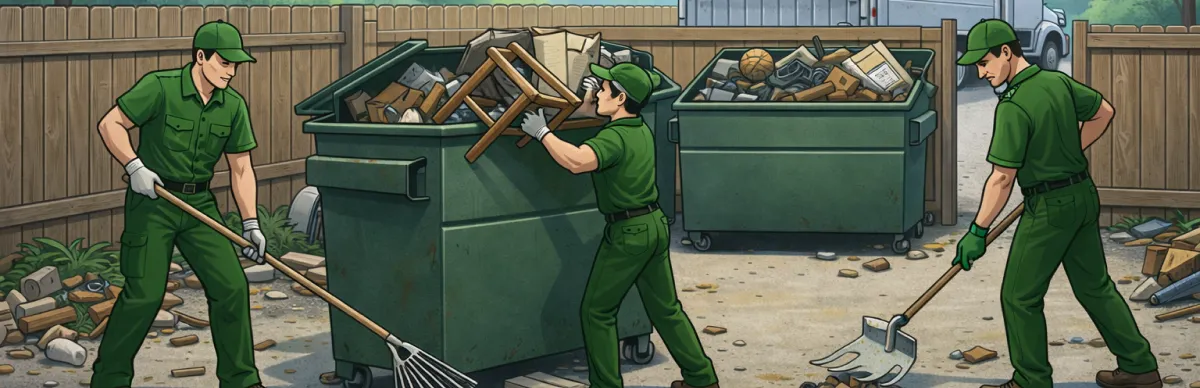
Efficient Debris Removal
Cost-Effective Waste Solutions
Environmentally Friendly Practices
Regulatory Compliance Assurance
Improved Site Safety
Streamlined Project Timelines
Coordinating Construction Debris Disposal with Tucker's Building Division and Public Works Department
Construction and demolition (C&D) waste generated within Tucker must be managed in accordance with municipal permitting and disposal requirements. Any renovation, demolition, or new construction project that produces debris—including drywall, lumber, roofing materials, concrete, and metal—requires coordination with city departments before waste removal begins. Tucker's Building Division oversees construction permits and ensures that waste management plans align with approved project scopes.
Key coordination steps include:
- Obtain a building permit before beginning any demolition or renovation that generates construction debris
- Submit a waste management plan as part of the permit application for larger projects
- Schedule inspections through the Building Division to verify proper debris containment on-site
- Coordinate hauling routes with the Public Works Department to avoid conflicts with road maintenance or traffic operations
- Maintain site cleanliness per code requirements to prevent debris from entering stormwater systems
Failure to secure proper permits before generating construction waste may result in code enforcement action and project delays.
Tucker Building Division
4119 Adrian Street, Tucker, GA 30084
Phone: (678) 597-9040
Official Website: Tucker Building Division
Georgia's Solid Waste Management Act and Construction Debris Compliance Requirements
Georgia regulates construction and demolition waste under the Georgia Comprehensive Solid Waste Management Act (O.C.G.A. § 12-8-20 et seq.), which establishes standards for the handling, transport, and disposal of C&D materials statewide. The Georgia Environmental Protection Division (GA EPD) enforces these regulations and permits solid waste handling facilities, including C&D landfills and recycling operations.
Important state-level requirements for Tucker construction projects include:
- C&D landfills must hold a valid solid waste handling permit issued by GA EPD
- Asbestos-containing materials must be identified and removed by licensed abatement contractors before demolition, per Georgia Rule 391-3-4-.15
- Hazardous waste such as lead paint, solvents, and chemical adhesives cannot be disposed of in C&D landfills
- Waste transporters hauling C&D debris commercially must comply with Georgia's solid waste hauler registration requirements
- Illegal dumping of construction debris carries penalties including fines up to $25,000 per day per violation under state law
All construction waste generated in Tucker must be transported to permitted facilities, and project managers should verify that any disposal site holds current GA EPD authorization.
Georgia Environmental Protection Division
2 Martin Luther King Jr. Drive SE, Suite 1456, Atlanta, GA 30334
Phone: (404) 656-4713
Official Website: Georgia Environmental Protection Division
Material Sorting and Separation Standards for Tucker Construction Projects
Proper sorting of construction and demolition debris is essential for regulatory compliance and landfill diversion. Tucker contractors and property owners should separate materials on-site before transport to maximize recycling potential and reduce disposal costs at permitted facilities. DeKalb County, which provides certain waste management services in the Tucker area, may impose additional sorting requirements at transfer stations and recycling facilities.
Materials commonly generated during construction projects should be sorted into the following categories:
- Clean wood and lumber — untreated, unpainted wood can be recycled or repurposed; treated lumber requires separate disposal
- Concrete, brick, and masonry — accepted at C&D recycling facilities for crushing and reuse as aggregate
- Metals (steel, copper, aluminum) — highly recyclable through scrap metal processors; should be separated from mixed debris
- Roofing materials (asphalt shingles) — some facilities accept shingles for recycling into road paving material
- Drywall and gypsum board — recyclable at specialized facilities; must be kept dry and free of contamination
- Hazardous materials (paint, caulk, adhesives, asbestos) — prohibited from C&D waste streams and require separate handling through licensed hazardous waste contractors
Mixing hazardous materials with standard C&D debris can result in load rejection at disposal facilities and potential code enforcement violations through Tucker Code Enforcement.
Stormwater Protection and Environmental Compliance During Tucker Construction Activities
Construction sites in Tucker must implement erosion and sediment control measures to prevent construction debris and pollutants from entering the municipal stormwater system. The Tucker Public Works Department oversees stormwater management within city limits, while DeKalb County Watershed Management provides broader watershed protection services for the area.
Environmental compliance requirements for construction waste management include:
- Erosion and sediment control plans are required for land-disturbing activities exceeding certain thresholds; contact the Tucker Engineering Department for specific requirements
- Debris containment — all construction waste must be stored in covered or enclosed areas to prevent wind-blown debris and stormwater contamination
- Washout areas for concrete trucks and equipment must be designated and contained on-site
- Prohibited discharges — construction sediment, paint, concrete slurry, and chemical runoff must not enter storm drains, ditches, or waterways
- NPDES permit compliance — projects disturbing one acre or more require a National Pollutant Discharge Elimination System permit through GA EPD
The EPA's RCRA program also governs the disposal of any hazardous construction waste, and contractors should ensure compliance with both federal and state requirements.
Tucker Public Works Department
4119 Adrian Street, Tucker, GA 30084
Phone: (678) 597-9040
Official Website: Tucker Public Works Department
Lead Paint and Asbestos Handling Requirements for Tucker Renovation and Demolition Projects
Tucker contains numerous residential and commercial structures built before 1980, which may contain lead-based paint and asbestos-containing materials (ACM). Federal and state regulations impose strict handling and disposal requirements for these hazardous materials during construction, renovation, and demolition activities.
Critical safety and compliance requirements include:
- Pre-1978 buildings — the EPA Renovation, Repair, and Painting Rule requires certified renovators to use lead-safe work practices when disturbing lead-based paint
- Asbestos surveys — Georgia requires a thorough asbestos inspection by a licensed inspector before any demolition of commercial buildings and recommends inspections for residential properties
- Licensed abatement — friable asbestos must be removed by Georgia-licensed asbestos abatement contractors before demolition proceeds
- Disposal requirements — asbestos waste must be double-bagged in labeled, leak-tight containers and transported to a landfill permitted to accept asbestos
- OSHA standards — workers handling lead or asbestos must have proper respiratory protection, training, and medical monitoring per OSHA 29 CFR 1926.62 (lead) and 29 CFR 1926.1101 (asbestos)
- Notification requirements — GA EPD requires a 10-working-day advance notification before any demolition or renovation involving asbestos
The Tucker Fire Marshal's Office may also conduct inspections related to building safety during demolition activities.
What Neighborhoods Do We Serve Throughout Tucker, GA?
- Downtown Tucker — The historic commercial core features older mixed-use buildings where renovation projects frequently encounter lead paint and legacy building materials requiring specialized handling. Narrow Main Street access may necessitate traffic coordination for debris hauling vehicles.
- Northlake Area — Commercial and retail properties in this corridor generate significant construction waste during tenant buildouts and renovations. Proximity to major roadways facilitates efficient debris transport to permitted disposal facilities.
- Smoke Rise — This established residential community features homes built primarily in the 1960s and 1970s, where roof replacements and kitchen renovations produce substantial C&D debris. Wooded lots require careful erosion control during construction activities.
- Midway Woods — Single-family homes in this neighborhood undergo frequent remodeling projects. Residential street widths accommodate standard hauling vehicles, though cul-de-sac turnaround space should be verified before scheduling debris removal.
- Tucker Heights — A mix of mid-century ranch homes and newer infill construction creates varied waste streams. Pre-1978 structures require lead paint assessments before renovation debris removal.
- Brockett Area — Residential properties near Brockett Road include both single-family homes and multi-family developments. Larger renovation and demolition projects in this area should coordinate with Tucker Planning & Zoning for permit compliance and waste management plan approval.